

For years, scientists have been keeping a wary eye on the massive system of currents that carry water and nutrients across the ocean from Greenland to Antarctica. The Atlantic Meridional Overturning Circulation plays a large part in stabilizing the global climate, but it appears to have been weakening in recent years as the Earth warms. Should it collapse, drought would spread across the Southern Hemisphere and the Eastern Seaboard of the United States would see catastrophic sea level rise. It could also trigger a series of other tipping points, from which the Earth would likely not recover.
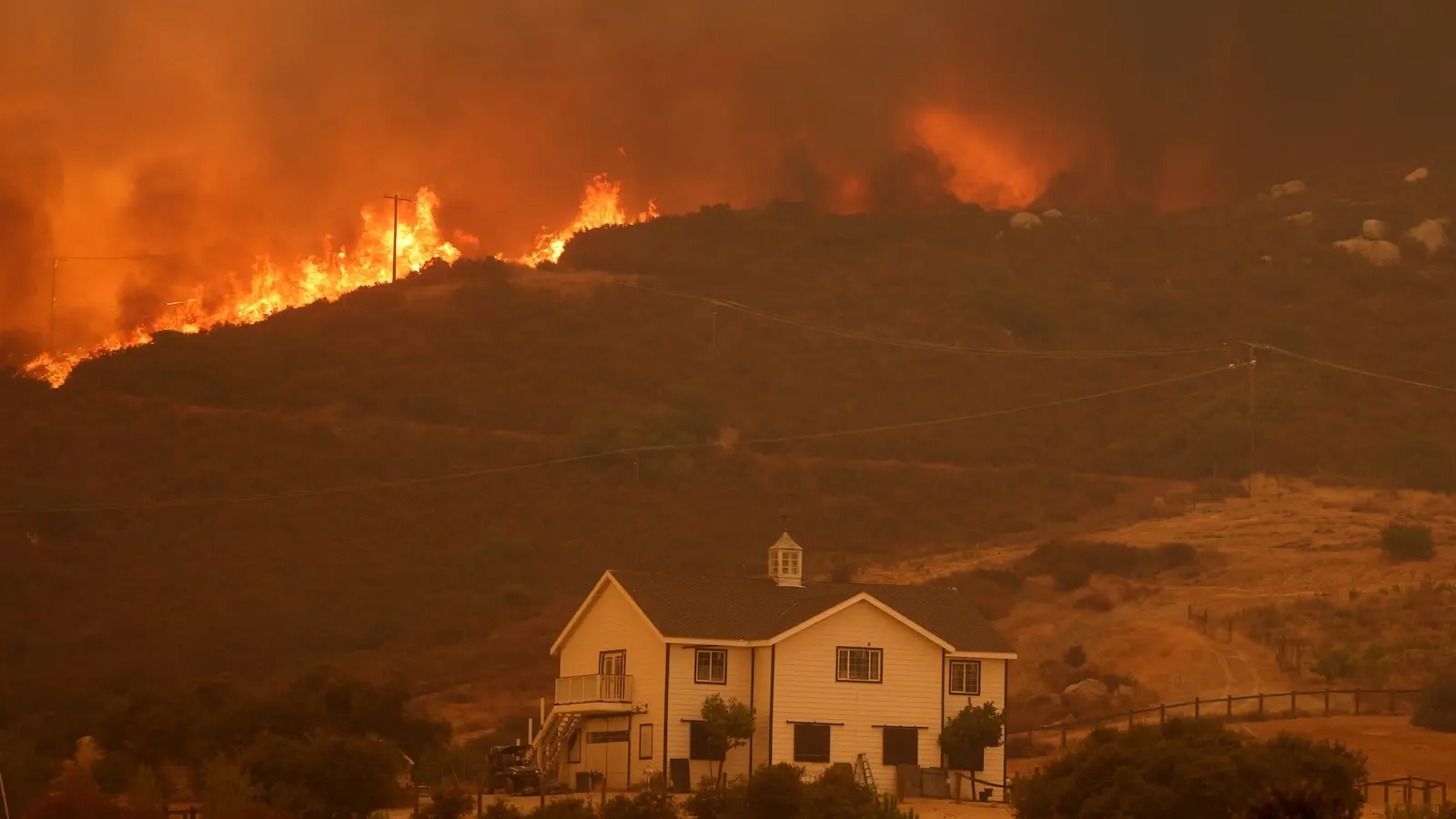
To avoid this scenario, 195 countries signed onto the Paris Agreement in 2015 — a landmark treaty that aimed to keep global warming below 1.5 degrees over pre-industrial times. Beyond that threshold, scientists say, the Earth’s climate could begin to deteriorate in unpredictable and irreversible ways. The past few years have been the warmest on record, and the importance of staying within this limit has been driven home as deadly heatwaves and rampant wildfires have become routine.
A recent study published in Geophysical Research Letters claims that warming has accelerated rapidly over the past decade, with temperatures rising almost twice as fast as they did between 1970 and 2015. The study echoes the findings of a report published last year, authored by the scientist James Hansen, who famously testified about the dangers of global warming in front of the US Congress in 1988. Should warming continue on this trajectory, the latest study says, the planet could cross the 1.5 degree threshold before 2030.
The authors arrived at this conclusion after isolating the “noise” from the climate system — controlling for the El Niño weather pattern, which warms the earth, as well as for volcanic eruptions and solar flares. What they found was that while the Earth warmed by 0.2 degrees each decade between 1970 and 2015, it has warmed by 0.35 degrees in the decade since — a 75 percent spike.
This puts us on a collision course with the climate’s tipping points, said Stefan Rahmstorf, an author of the study and head of Earth system analysis at the Potsdam Institute for Climate Impact Research. The United Nations’ Intergovernmental Panel on Climate Change, he said, “has concluded that the risk of crossing such tipping points increases from moderate to high between 1.5 and 2.5 degrees of warming. So we are basically moving faster into high risk territory now.”
Over the past few years, scientists have warned that we’re entering a period of overshoot, in which the world pushes past the 1.5 degree Paris limit. How bad things get, Rahmstorf explained, all depends on how long the planet stays above 1.5 degrees. The Greenland Ice Sheet, for example, might be salvageable if people figure out how to bring emissions down and actively cool the planet, limiting that overshoot period to two or three decades. But if it reaches a tipping point, it will enter a feedback loop that’s impossible to stop — ultimately causing 24 feet of global sea level rise.
“I think that it is actually quite tragic that the U.S. government has decided to put their head in the sand and pretend there is no problem when the data are showing exactly the opposite,” Rahmstorf said.
Outside experts cautioned that the situation might not be accelerating quite as fast as the study makes it seem. “They don’t consider underlying uncertainties that you might refer to as structural uncertainties in the reconstruction of global temperatures,” said Sofia Menemenlis, the lead author of a study on satellite-era readings of sea surface temperatures published in Nature Climate Change last summer. The study found high variability within satellite sea surface temperature readings, which are often used to reconstruct the last century of climate data. While there has been a clear and dramatic warming trend since the 1950s, a decade is a very short timescale when it comes to the climate.
“I think that trends calculated over a short period of time have to be understood as a somewhat provisional way of looking at the rate of global warming,” said Menemenlis, a doctoral student at Princeton University’s atmospheric and oceanic sciences program.
Daniel Schrag, a professor of environmental science and engineering at Harvard University, put it a little more directly. The authors say “they’ve corrected for the El Niño, but that’s almost impossible to do, because every El Niño is different,” he explained. “That’s a very shaky thing to do, so I don’t really buy that analysis.” Schrag said climate models rarely capture the Pacific Decadal Oscillation — a 20- or 30-year routine shift in sea surface temperatures sometimes described as a “long-term El Niño.” Without accounting for that, it’s difficult to remove enough “noise” from the climate data to ensure you’re getting a clear warming signal over a period as brief as a decade.
“I think it’s really important for the public to understand what we know, but also what we don’t,” Schrag said. “This whole phenomenon is terrifying. It doesn’t need to be exaggerated, and when you exaggerate, you lose credibility.”