

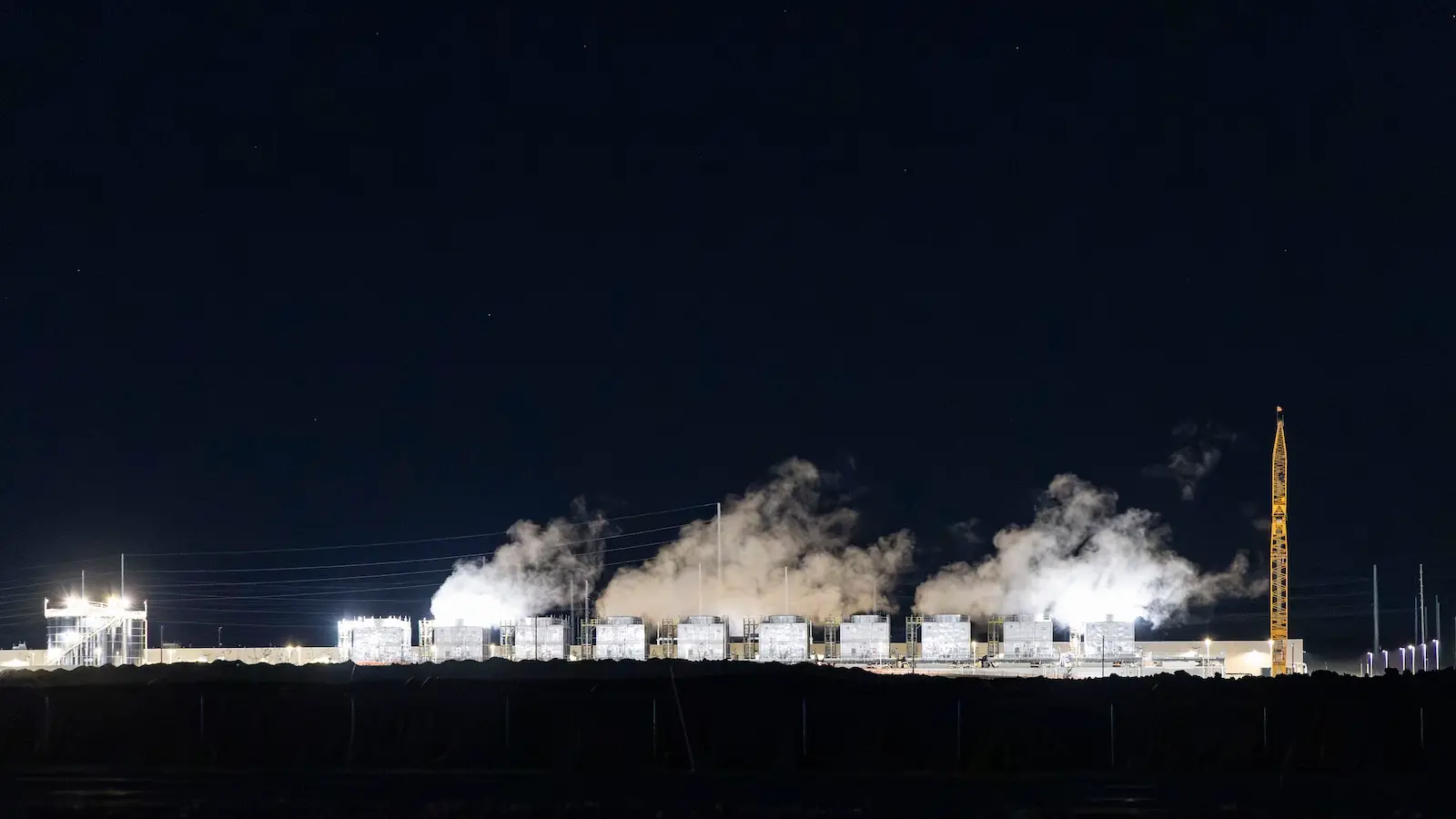
This story is made possible through a partnership between Grist and The Flatwater Free Press, Nebraska’s first independent, nonprofit newsroom focused on investigations and feature stories.
Rick Wheatley owns a property with about 80 acres in Nebraska’s Otoe County — an area east of Lincoln known for its farmland, apple orchards, and Arbor Day celebrations. Wheatley’s land, a portion of which is used for growing corn and soybeans, has been in his family for generations. Sometime last fall, a representative from a private energy developer Tenaska approached Wheatley about possibly purchasing the land.
Wheatley said the representative mentioned the company was trying to assemble and secure the right to purchase 2,000 acres near a gas pipeline for a power plant that could serve an AI data center.
“At first he kind of slipped and said for AI, they need their own generating stations for AI,” Wheatley said. “But then they kind of backpedaled it.” According to Wheatley, the Tenaska representative then told him that the company planned to have a business park.
“And I thought, ‘What do you mean it’s a business park? Who’s going to build out there in the middle of nowhere?’” Wheatley said. In the end, he chose not to deal with the company. However, he wasn’t the only one to get a knock on his door.
Since December, Tenaska has entered into agreements with landowners for over 2,600 acres across southeast Nebraska under two different LLC names, according to county deed records. The agreements allow Tenaska the exclusive option to buy the land. Tenaska did not respond to requests for comment about the land deals.
According to documents obtained by the Flatwater Free Press and Grist, Tenaska appears poised to build a utility-scale natural gas plant to power one of the largest data centers in the country. The documents suggest that Google would operate the data center and that the project may also be one of the largest test cases for carbon capture and storage, a controversial way to deal with runaway emissions that has not yet proven effective as a solution for climate change.
Nebraska, like many other states, is approaching a tipping point as it relates to energy demand, who can afford to supply it, how practical its emissions goals are, and the desire for economic activity to steadily grow. A recent report by the energy research and development nonprofit Electric Power Research Institute found that Nebraska is one of seven states that is on track to have data centers use over 20 percent of their total electricity consumption by 2030.
At the same time, a bill intended to allow for the creation of privately owned and operated power plants that serve large industrial facilities and are hooked up to the grid is being considered by the state legislature. Tenaska has publicly supported the bill, which was proposed by Governor Jim Pillen. The proposal could hinge on this bill’s passage.
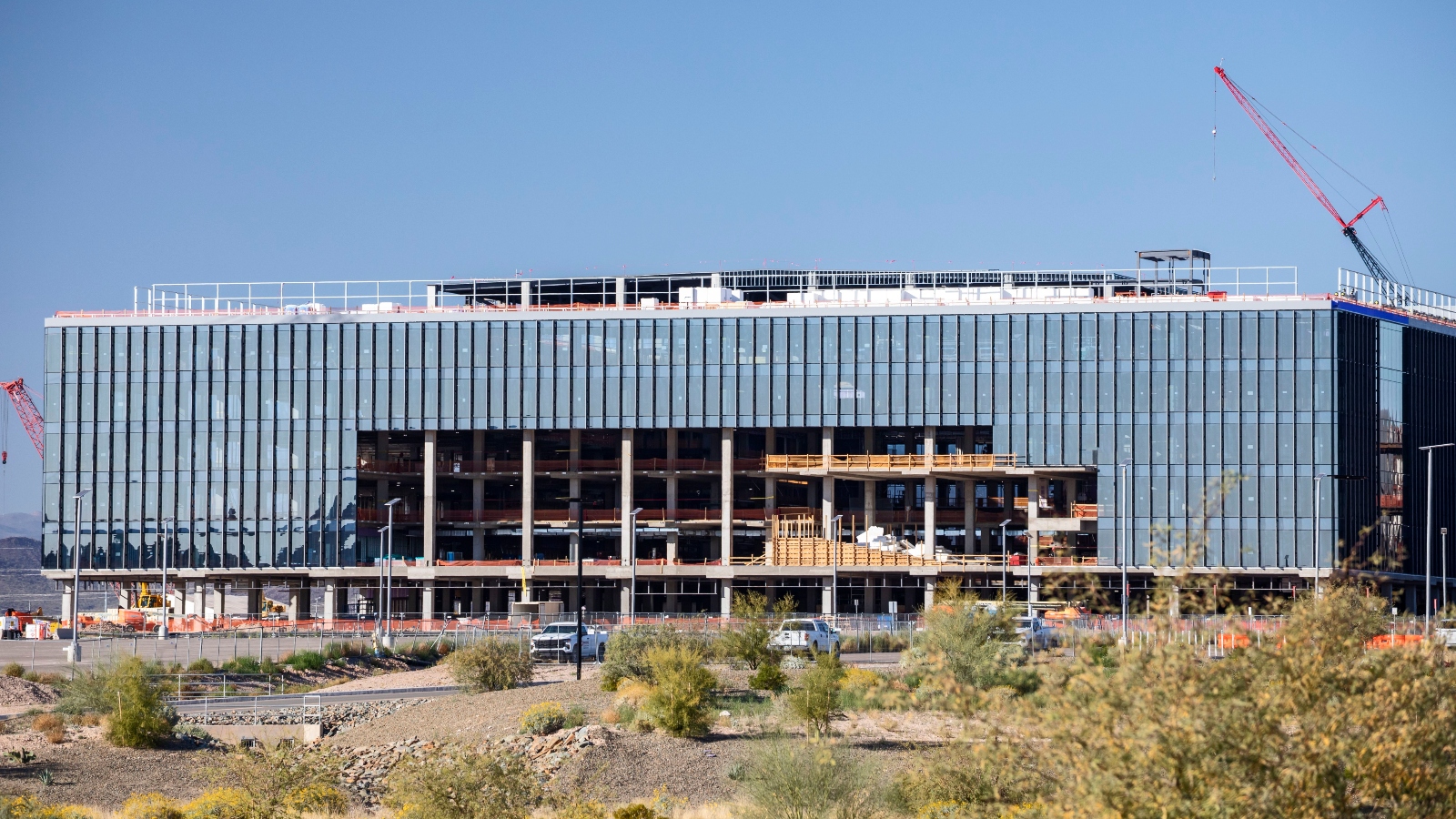
According to the documents, which were shared at a private meeting of a Nebraska public power district in January, the proposed data center would use between 1,000 and 3,000 megawatts of power from a combined cycle natural gas plant. If the facility were to operate at the higher end of that range, it would generate more power than the largest power plant in the state.
As outlined in the documents, the proposed project names three companies: Google, Tenaska, and natural gas and carbon dioxide pipeline company Tallgrass Energy. Tenaska, an Omaha-based company, would be responsible for powering the new data center, while Tallgrass would potentially supply both the natural gas and transport the captured carbon.
The documents state that the proposed project could be online as soon as 2029, though it’s unclear how close this proposal is to becoming a reality. Neither Google nor Tenaska responded to multiple inquiries and requests for comment. Tallgrass, in a statement to Flatwater, denied being involved in the project.
Kenny Zoeller, director of policy research for Pillen’s office, acknowledged that the companies tied to the proposed project have been part of discussion that ultimately led to the legislation. But they are not the only ones, he said. The governor’s office also consulted with the state’s public power districts, he said.
If the bill passes, private power plants for large industrial facilities would then be able to hook up to their local power district’s grid and sell excess power back. The state’s public power districts have endorsed the measure, and the Omaha Public Power District, or OPPD, said it is aware of a potential project that could be impacted by the bill — though the power district reiterated it doesn’t comment on specific projects. OPPD, Nebraska Public Power District, and Lincoln Electric System said in statements they do not discuss potential customers until they’re announced publicly, noting those proposals can involve nondisclosure agreements.
According to Zoeller, the bill was not drafted for any single industry or project. The goal, he said, is to make Nebraska economically competitive while ensuring ratepayers don’t have to pay for a large user’s power needs.
“There have been multiple companies that have indicated to the Governor and his office that legislation like this would make Nebraska a competitive place for investment,” Zoeller said in a statement. “However, no investment has ever predicated on the passage of LB1261.”
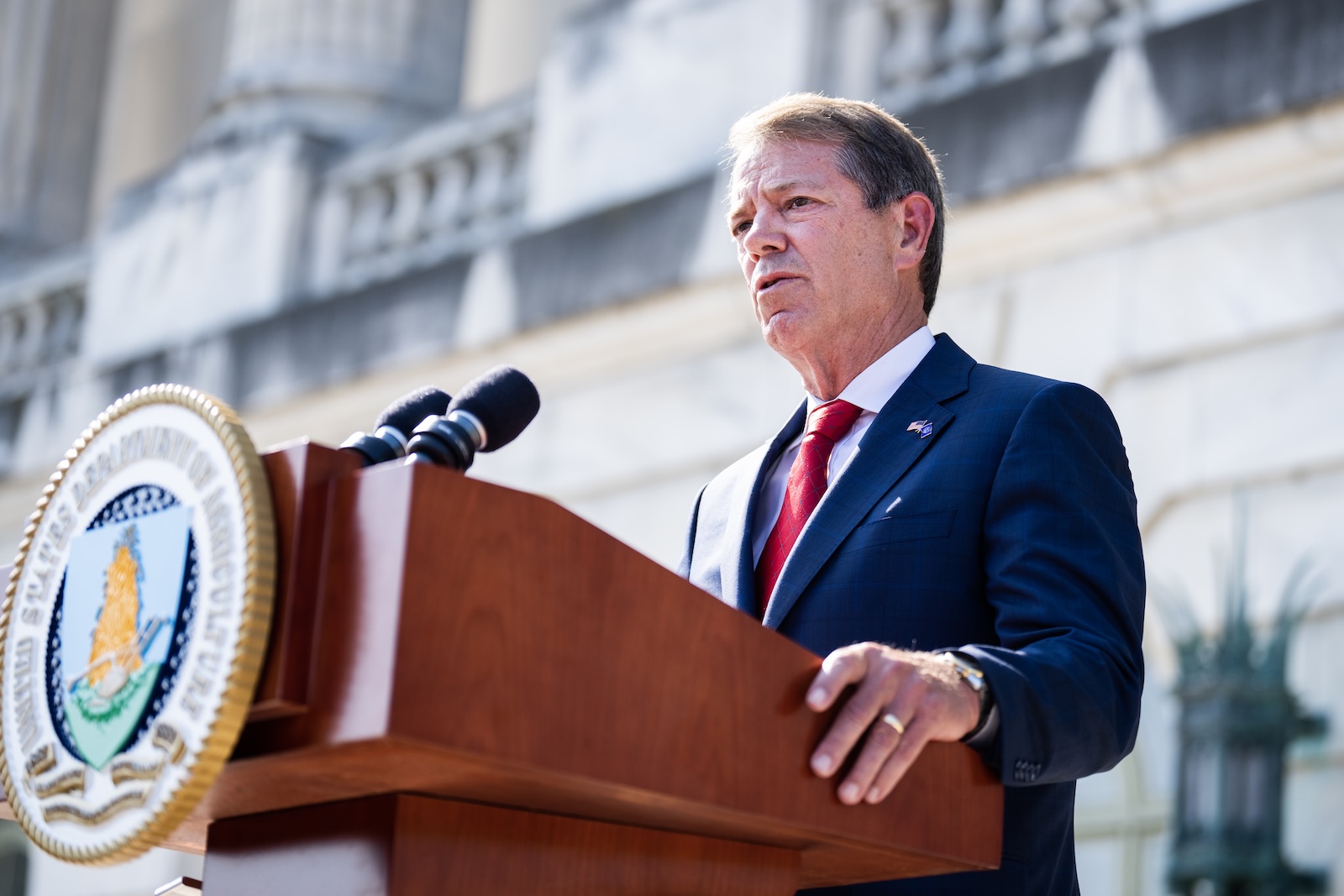
Tom Williams / CQ Roll Call via Getty
Google’s parent company, Alphabet, plans to continue ramping up its overall data center investments in 2026, spending up to $185 billion on what it calls technical infrastructure, according to the company’s earnings call in February. Google already has three data center locations in Nebraska. From 2021 to 2023, the company claims that it has supported about 13,300 jobs, and since 2019 has invested over $3.5 billion in the state’s digital infrastructure.
The scope of the company’s proposal, as outlined in the documents, is massive. The data center itself would be among the largest in the country, according to Kenneth Gillingham, a professor of environmental and energy economics at Yale University.
The amount of power would be significantly more than the 800 megawatts needed across Lincoln Electric System’s service area in the summer when energy demand is at its highest. The gas plant would be the largest power plant in Nebraska. And if the project does incorporate carbon capture and storage, it would be the largest operation of its kind in the country, Gillingham said.
“In the U.S., there’s nothing that large with CCS,” he said, using the acronym for carbon capture and storage.
Nebraska is a public power state, and under current state law, private power generation from fossil fuels is allowable, but those facilities cannot connect to the grid. The governor’s bill would make it possible for private energy developers and operators, like Tenaska, that want to generate more than 1,000 megawatts of power specifically for a large industrial customer to connect to the grid and sell any excess electricity back to the local public power district.
While the developer can use any energy source, Joshua Fershée, dean of Creighton University’s law school, said this bill would make it easier to use fossil fuel generation.
The power plant would have to be on the same property or next to the industrial user, and would have to be approved by the power review board. The private generator would have to have an agreement in place with the local utility before Jan. 1, 2032, and the customer would have to pay all fees and costs tied to hooking up to the public power district’s grid.
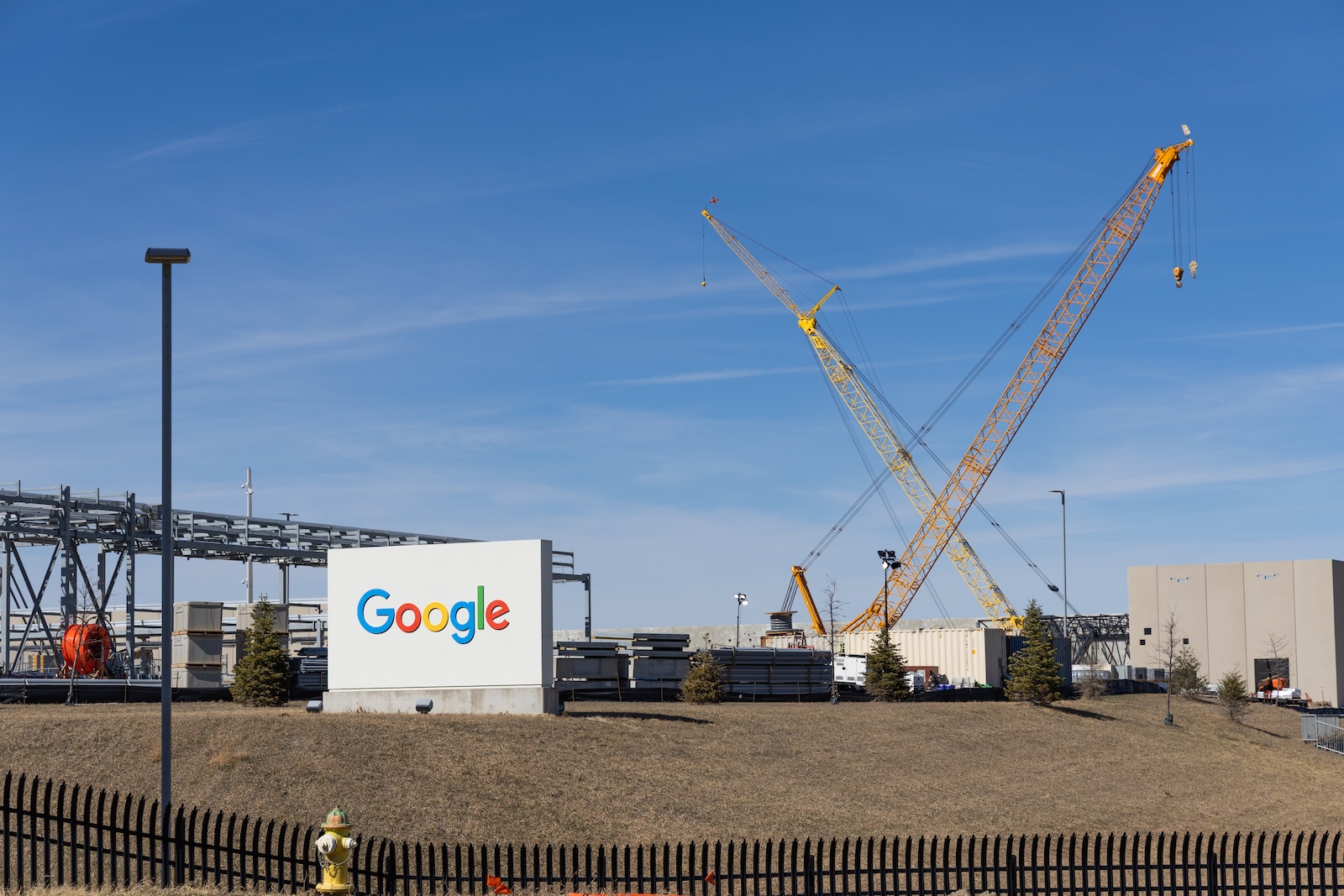
Naomi Delkamiller / Flatwater Free Press
Google announced its first carbon capture and storage project last October for a 400-megawatt gas plant in Illinois that will support its data centers in the region. The project in Nebraska would be significantly larger.
“Google has very ambitious net-zero targets, and they have the money and they could do it,” Gillingham said. “This would be a huge investment by Google, fundamentally, to see if it can be done at a larger scale and more cost effectively than it’s ever been done before.”
Much like the overall proposal, though, it’s unclear if the carbon capture piece will actually materialize. Although the documents obtained by Flatwater and Grist specifically mention Tallgrass as the potential natural gas supplier and transporter of the captured carbon, Steven Davidson, Tallgrass’ senior vice president of government and public affairs, said the company currently does not have partnerships for a new data center or a Tenaska gas plant in Nebraska.
“While we are not in a partnership with anyone to build a data center in Nebraska,” Davidson said in a statement, “Nebraska is an exceptional state for investing and growing in a manner that respects local communities, expands opportunities for families to succeed, and focuses on long-term collaboration to improve people’s lives.”
Davidson expressed support for the governor’s bill.
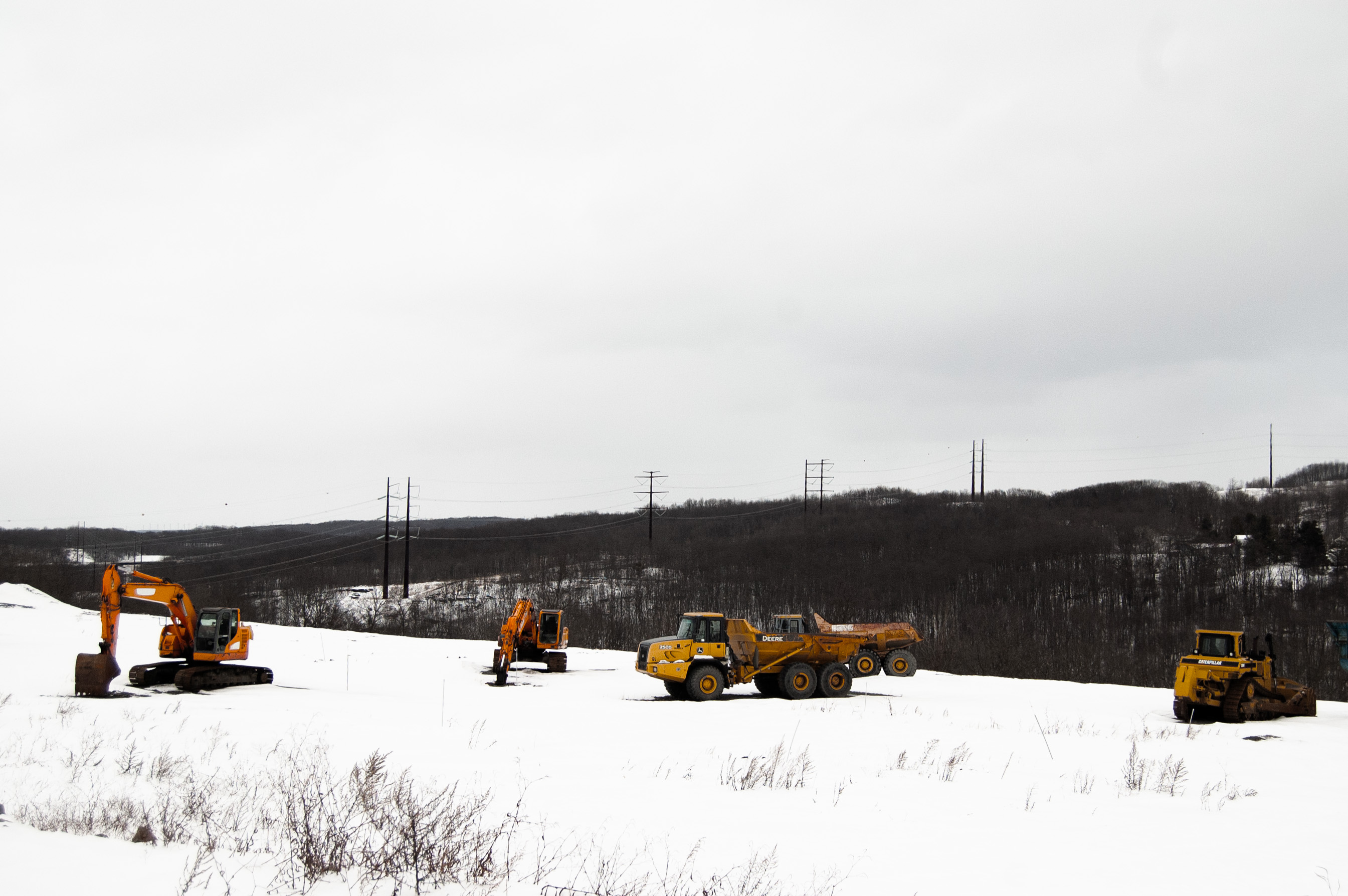
Over the last several months, as Tenaska scoured southeast Nebraska for land to house the potential data center and power plant, the company found several landowners willing to sell — including one state lawmaker.
Senator Myron Dorn, whose district spans Gage County and parts of southeast Lancaster County, signed an agreement with Tenaska earlier this year, allowing the company the exclusive right and option to purchase about 80 acres he owns in Gage County. Dorn said during their conversations, representatives mentioned both data centers and a power plant and had talked about a pipeline, but they didn’t outright say the land would be used for a data center powered by a gas plant.
Dorn, who is in his eighth year in the legislature, had not publicly disclosed the potential land deal as a conflict when he was contacted by the Flatwater Free Press and Grist last week. He said he had not looked at the governor’s bill and was unsure if the agreement he reached with Tenaska posed a conflict of interest that would require disclosure.
“Hadn’t thought of it. Didn’t realize the bill was out of committee and up that quick,” Dorn said.
Scott Danigole, executive director of the Nebraska Accountability and Disclosure Commission, said that if passing LB1261 would increase the likelihood of the sale, Dorn should file a conflict of interest form before any discussion or vote on the bill.
Last Tuesday, he filed a disclosure noting the agreement and potential conflict of interest it posed. That filing came the same day the legislature began debating the bill.
Filing the form does not preclude the senator from voting on the bill. On his disclosure form, Dorn explained his decision not to abstain from voting.
“My vote is only one of 49,” he wrote. “This bill will benefit the entire state and any landowner who may contract with a private entity. It is not exclusive to my property.”
The bill advanced through its first of three votes last week, after which it would head to the governor’s desk.